Are Video Games Good for Kids? Benefits, Risks, and What Parents Should Know
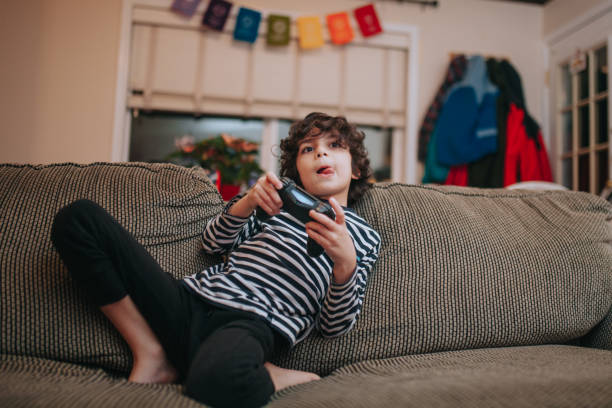
Your child finishes homework, tosses their backpack aside, and immediately asks for screen time. Sound familiar? For most parents today, this is a daily reality. And the big question is always the same: are video games actually good for kids, or are they something to worry about?
The honest answer is: it depends. Video games are not simply good or bad. Like most things in parenting, context matters. The type of game, the amount of time your child spends playing, and how you, as a parent, stay involved all shape the outcome.
This guide walks you through what the research actually says, the real benefits, the genuine risks, and practical steps you can take to make video game time work in your child’s favor.
What Does Research Say About Video Games and Child Development?
Scientists have studied video games and children for decades, and the findings are more nuanced than headlines suggest. The American Psychological Association reviewed over 100 studies and found that action video games improve certain visual-spatial skills, attention, and mental rotation abilities in children.
A 2022 study published in JAMA Network Open followed over 2,000 children aged 9 to 10. Researchers found that kids who played video games for three or more hours per day scored higher on cognitive skill tests related to memory and impulse control compared to non-gamers.
On the flip side, excessive gaming, particularly without balance, links to sleep disruption, reduced physical activity, and in some cases, behavioral changes. The keyword here is excessive. Moderated play consistently shows neutral to positive outcomes in child development research.
What this means for parents: the research does not support an all-or-nothing approach. It supports an informed, engaged approach.
Benefits of Video Games for Kids
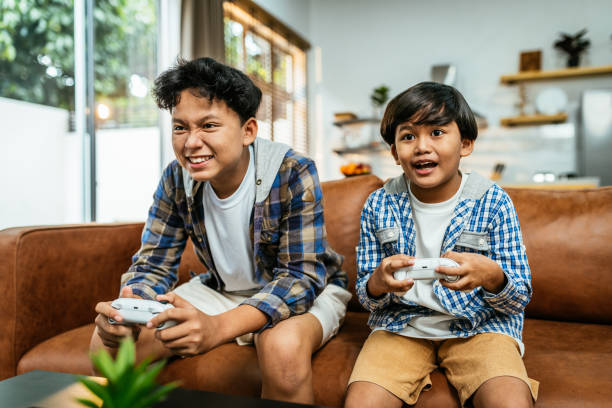
When children play the right types of games in reasonable amounts, the benefits are real and measurable. Here is a breakdown of what gaming actually does for your child’s development.
Cognitive Development and Problem Solving
Strategy games like Minecraft, Portal, and even Mario Odyssey require children to think ahead, test solutions, and adapt when something does not work. This kind of iterative thinking builds genuine problem-solving skills that transfer to school and real life.
What works in practice is giving kids games with open-ended challenges rather than linear click-through tasks. The more a game requires planning, the more cognitive exercise it provides.
Improved Hand-Eye Coordination
Action games require fast, precise responses. Children who play these games regularly develop stronger hand-eye coordination and faster reaction times. Researchers at the University of Toronto found that regular gamers outperform non-gamers on sensorimotor tasks, which involve coordinating what the eyes see with what the hands do.
This benefit shows up in real-world activities too, from catching a ball to typing on a keyboard.
Creativity and Imagination
Sandbox games give children an open canvas. Minecraft, in particular, has become one of the most popular educational tools in schools worldwide precisely because it encourages creative thinking and experimentation without a fixed outcome.
Children who play open-world creative games tend to approach problems with more flexibility. They learn that there is rarely just one right answer.
Social Skills and Teamwork
Multiplayer games teach children how to communicate, delegate, and collaborate toward a shared goal. Games like Overcooked, Roblox, and Fortnite require real-time cooperation. Kids learn to handle wins and losses with teammates, which mirrors the dynamics of classroom group projects and, later, workplace teams.
For children who struggle socially in person, online multiplayer environments sometimes offer a lower-stakes space to build confidence and communication skills before applying them face to face.
Stress Relief and Emotional Regulation
After a hard day at school, some children genuinely decompress through gaming. Research published in the journal Computers in Human Behavior found that casual gaming reduces stress and improves mood in children and adolescents.
The key distinction here is casual or structured gaming versus compulsive play. When children use games as one of several healthy outlets, it functions as a legitimate stress management tool.
Educational Video Games
A growing category of games targets academic skills directly. Titles like Prodigy Math, Duolingo, and Kerbal Space Program teach math, language, and physics in formats children genuinely enjoy. Many schools now integrate these tools into classroom learning.
Studies show that learning through gameplay improves retention compared to traditional worksheets because children engage more deeply when they feel like they are playing rather than studying.
Looking to take that learning energy even further?
Embassy Education offers online courses designed specifically for kids, covering subjects that build real academic skills in an engaging, age-appropriate format. If your child already loves screen time, structured online learning can channel that energy into something that genuinely moves them forward.
Explore Courses for KidsRisks and Downsides of Video Games for Children
A balanced view requires honesty about the risks. These are real, but they are also preventable with the right approach.
Excessive Screen Time
The World Health Organization recommends no screen time for children under 2, one hour maximum per day for children aged 2 to 4, and consistent limits for older children. The American Academy of Pediatrics echoes this and emphasizes quality over quantity for school-aged kids.
The problem is not the screens themselves. The problem is when gaming crowds out sleep, physical activity, homework, and face-to-face interaction. Most parents we hear from do not struggle with gaming per se. They struggle with the transition away from it.
Exposure to Violent or Inappropriate Content
Not all games are appropriate for all ages. The Entertainment Software Rating Board (ESRB) assigns age ratings to every major game. Ratings range from EC (Early Childhood) to AO (Adults Only). Parents who check these ratings before purchasing put themselves in a much stronger position.
Beyond violence, some online games expose children to adult strangers through chat features. Parental controls on most consoles allow you to restrict or monitor this entirely.
Impact on Sleep and Physical Health
Late-night gaming disrupts sleep cycles, especially in younger children. Screens emit blue light that suppresses melatonin, the hormone that signals the body to sleep. A child who games until 10 pm will almost always struggle to fall asleep by 10:30.
Sedentary behavior is the other concern. Gaming in long sessions with no movement breaks contributes to poor posture, eye strain, and reduced physical fitness over time.
Gaming Addiction and Behavioral Changes
The WHO officially recognized gaming disorder in 2018, defining it as impaired control over gaming that takes priority over other activities despite negative consequences. This affects a small percentage of players but is worth taking seriously.
Warning signs to watch for include: your child abandons other hobbies entirely, becomes angry or aggressive when you limit game time, lies about how much they play, or experiences declining grades alongside increased gaming.
How Much Gaming Time Is Appropriate for Kids?
Age-based guidelines give parents a helpful starting point.
- Under 6 years: Limit to 30 to 60 minutes per day. Focus on educational, non-violent games only.
- Ages 6 to 12: One to two hours on school days is a reasonable limit. More flexibility on weekends is fine as long as other activities stay intact.
- Ages 13 to 17: Two hours on school days, with parental discretion on weekends. Content monitoring becomes more important at this stage.
These are guidelines, not rigid rules. A child who games for two hours but also plays sports, reads, and sleeps well is in a very different situation from a child who games for two hours while skipping everything else.
Tips for Parents: How to Set Healthy Video Game Limits
You do not need to be a tech expert to manage this well. These strategies work for most families.
- Play with your child: Co-playing for even 15 minutes per week shows you care, helps you understand what they are playing, and gives you genuine conversation starting points.
- Use built-in parental controls: Every major console, including PlayStation, Xbox, and Nintendo Switch, has parental control settings that let you cap daily playtime, restrict content ratings, and monitor spending.
- Create a daily schedule: Post a visible screen schedule that shows when gaming is allowed. Predictability reduces conflict because children know what to expect.
- Set non-negotiable priorities first: Homework, dinner, and at least 30 minutes of physical activity come before any gaming. Make this a household rule, not a negotiation.
- Keep devices out of bedrooms at night: This single change solves most late-night gaming and sleep problems in one move.
- Talk about games without judgment: Ask your child what they are playing and why they enjoy it. Understanding their perspective opens the door to better conversations about limits.
Best Types of Video Games for Kids by Age
Not all games carry the same value. Here is a quick reference to help you choose age-appropriate titles that offer genuine developmental benefits.
| Age Group | Recommended Game Types | Examples |
|---|---|---|
| 3 to 5 years | Puzzle and creative games | PBS Kids, Toca Boca, Endless Alphabet |
| 6 to 10 years | Educational and adventure games | Minecraft Education, Mario Kart, Prodigy Math |
| 11 to 14 years | Strategy and cooperative games | Roblox, Overcooked, Portal 2 |
| 15 and up | Simulation and RPG games | The Sims 4, Stardew Valley, Civilization |
When in doubt, look for games that reward creativity, cooperation, and persistence rather than games that reward purely reflexive or competitive behavior.
Conclusion
Video games are not the enemy of childhood development. Unchecked, unmonitored, or excessive gaming is problematic. When parents stay engaged, set clear limits, and choose games thoughtfully, children can genuinely benefit from gaming as part of a balanced routine.
Think of it the way you think about food: the problem is never a single meal. The problem is an overall pattern. A healthy gaming diet looks like short sessions, age-appropriate content, and plenty of offline time in between.
Stay curious about what your child is playing. Stay consistent with the limits you set. And remember that your involvement makes more of a difference than any parental control app ever will.
Ready to make screen time count for more?
Helping your child build good habits around gaming is only part of the equation. The other part is making sure they have access to learning experiences that genuinely challenge and engage them. Embassy.education offers online courses built for kids that make that easy for parents to set up and track.
Browse Courses for KidsFAQs: Video games for kids
Video games can be both good and bad, depending on usage. They improve problem-solving, creativity, and coordination, but excessive play can affect sleep, behavior, and academic performance.
Video games can boost cognitive skills, hand-eye coordination, strategic thinking, and teamwork. Educational games also help improve math, language, and memory skills.
Too much gaming can lead to addiction, poor sleep, reduced physical activity, and behavioral issues. Violent games may also impact emotional development in some children.
Experts recommend limiting gaming to 1–2 hours per day for school-aged children, ensuring it doesn’t interfere with sleep, schoolwork, or physical activity.
Some studies suggest certain games may improve problem-solving and reasoning skills, but they don’t directly increase IQ. Benefits depend on the type of games played.
Violent games can increase aggression in some kids, especially younger ones. Parental guidance and age-appropriate game selection are essential.
Roblox can be safe with parental controls enabled. However, since it includes user-generated content, supervision is important to protect kids from inappropriate interactions.
Yes, moderate gaming can help reduce stress and improve mood by providing relaxation and a sense of achievement, especially with non-violent games.
Educational, puzzle, creative, and cooperative games are best. They encourage learning, teamwork, and critical thinking without exposing kids to harmful content.
Children can start playing simple, age-appropriate games around 4–5 years old, with strict time limits and parental supervision.
Many players lose interest due to long gameplay, distractions, or a lack of engagement. This is common and not necessarily harmful for kids.
Parents should set time limits, choose age-appropriate games, enable parental controls, and encourage a balance between gaming, studies, and physical activities.