3D Modeling for Kids: 16 Things Your Child Actually Learns
Children are naturally curious builders. They stack blocks, draw imaginary houses, create worlds in games, shape clay, and turn simple objects into stories. 3D modeling takes that same creativity and gives it a digital space where children can design, test, improve, and bring ideas to life.
That is why 3D modeling for kids is more than a fun computer activity. It helps children understand how objects are made, how shapes work together, how design choices affect results, and how creative ideas can turn into real digital models.
In simple terms, 3D modeling is the process of creating three-dimensional objects using digital tools. Children can design cars, robots, buildings, characters, toys, room layouts, city models, and many other objects. With beginner-friendly platforms such as Tinkercad, they can start building without needing advanced technical experience. Autodesk describes Tinkercad as a free web app for 3D design, electronics, and coding, making it an accessible introduction to digital design.
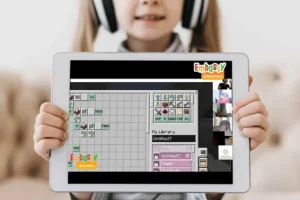
At Embassy Education, the 3D Modeling Course for Kids introduces children to designing 3D objects on the Tinkercad platform. The course helps children create models from scratch, edit ready-made models, import designs, and adjust them creatively while learning practical 3D design skills.
But what does your child actually learn from 3D modeling for kids?
The answer is much more than “how to make 3D objects.” Children learn spatial thinking, creativity, problem-solving, design planning, attention to detail, geometry, patience, and confidence with digital tools.
Quick Overview: What Children Learn Through 3D Modeling
| Skill Area | What Children Practice | Example in 3D Modeling |
|---|---|---|
| Spatial thinking | Understanding objects in 3D space | Rotating and viewing a model from different angles |
| Creativity | Turning ideas into digital designs | Designing a robot, car, or fantasy house |
| Geometry | Using shapes, size, scale, and angles | Combining cubes, cylinders, spheres, and cones |
| Problem-solving | Fixing design issues | Adjusting a model that does not align properly |
| Design thinking | Planning before creating | Sketching or imagining the final object first |
| Attention to detail | Improving accuracy | Resizing, grouping, aligning, and positioning parts |
| STEM learning | Connecting design with maths and engineering | Building structures that look balanced and realistic |
| Confidence | Creating something original | Completing and presenting a finished 3D model |
Why 3D Modeling for Kids Is a Valuable Learning Activity
Many children use screens mainly for watching videos or playing games. 3D modeling changes the relationship with technology. Instead of only consuming digital content, children create it.
That shift matters.
When children build a 3D model, they make decisions. They choose shapes, adjust sizes, rotate objects, test placements, fix mistakes, and improve the final design. This makes the learning active, practical, and creative.
Research on STEM learning often connects spatial skills with success in science, technology, engineering, and mathematics. A Frontiers in Education review discusses spatial interventions and spatial activities as important parts of STEM learning. Another education review found that 3D design and production applications can support skills such as scientific creativity, critical thinking, spatial thinking, and problem-solving.
For children, this means 3D modeling for kids is not only about making something look nice. It helps them think like designers, engineers, artists, and problem-solvers.
1. Logical Thinking1. Logical T1. Spatial Thinking
Spatial thinking is one of the biggest skills children develop through 3D modeling for kids.
In 2D drawing, children usually think in terms of height and width. In 3D modeling, they also need to think about depth. They must understand how an object looks from the front, back, side, top, and bottom.
For example, a child may design a simple chair. From the front, it may look correct. But when they rotate the view, they may notice that one leg is not aligned properly. This teaches them to think in three dimensions.
Spatial thinking supports many future areas, including architecture, engineering, robotics, product design, animation, and game development.
2. Creativity
3D modeling gives children a creative digital workshop.
A child can start with a simple cube and turn it into a house. They can combine cylinders and spheres to make a robot. They can create a sports car, a playground, a spaceship, or a city layout.
This type of creativity feels exciting because children can see their ideas take shape on the screen.
The Embassy Education 3D modeling course page explains that children can design robots, sports cars, and even plan a whole city through 3D design activities. This kind of project-based creation helps children connect imagination with practical design.
3D modeling for kids works especially well because it allows children to experiment freely. If one idea does not work, they can adjust it, resize it, rotate it, or rebuild it.
3. Geometry in a Practical Way
Many children learn geometry in school through diagrams, formulas, and worksheets. 3D modeling makes geometry visible and useful.
Children work with:
- Cubes
- Spheres
- Cylinders
- Cones
- Angles
- Symmetry
- Scale
- Position
- Rotation
- Measurements
For example, if a child builds a castle, they may use cubes for walls, cylinders for towers, cones for rooftops, and small shapes for windows. Without feeling like they are doing a formal maths lesson, they are applying geometric thinking.
This is one reason 3D modeling for kids can help children understand maths more naturally. They see how shapes work in real design.
4. Problem-Solving
Every 3D modeling project comes with small problems.
A roof may not sit properly on a house. Wheels may not align on a car. A robot arm may look too large. A bridge may seem unbalanced. A character may not look right from the side.
Children learn to ask:
- What is wrong with the design?
- Which part needs adjustment?
- Should I resize it?
- Should I rotate it?
- Should I move it?
- Should I rebuild that section?
This is practical problem-solving. Children learn to test, observe, adjust, and improve.
3D modeling for kids teaches children that design is rarely perfect on the first attempt. Good work usually comes from revision.
5. Design Thinking
Design thinking means understanding a problem, imagining a solution, creating a prototype, testing it, and improving it.
Children naturally practice this process in 3D modeling.
For example, if a child wants to design a pencil holder, they need to think about:
- What shape should it be?
- How big should it be?
- Where will the pencils go?
- Should it have compartments?
- Will it stand properly?
- How can it look more interesting?
This helps children think with purpose. They are not only decorating an object. They are designing something that should work.
3D modeling for kids introduces children to the same basic thinking used in product design, architecture, engineering, and creative industries.
6. Attention to Detail
Small details can change a 3D model completely.
If a shape is slightly misaligned, the model may look unfinished. If one side is too large, the object may feel unbalanced. If two objects overlap incorrectly, the design may not work as intended.
Children learn to slow down and check their work carefully.
They practice:
- Aligning shapes
- Grouping objects
- Adjusting measurements
- Rotating precisely
- Checking different views
- Refining edges and details
- Improving proportions
This attention to detail is useful beyond 3D modeling. It supports schoolwork, writing, maths, art, and project planning.
7. Patience and Persistence
A good 3D model takes time.
Children may begin with a simple idea, then realize it needs more changes than expected. They may need to rebuild a section, adjust measurements, or try a different design approach.
This teaches patience.
3D modeling for kids helps children understand that creative work is a process. A first version is not always the final version. Improving a design is part of learning.
Over time, children become more comfortable with trial and error. They learn not to quit just because something looks wrong at first.
8. Digital Confidence
Many children are comfortable using technology, but using technology is not the same as creating with it.
3D modeling helps children become digital creators.
They learn how to use tools, menus, workspaces, viewing angles, shape controls, alignment features, and editing functions. They begin to understand how professional-looking digital objects are made.
This builds confidence.
A child who completes a 3D model can say, “I designed this.” That sense of ownership is powerful. It helps children see technology as something they can control and use creatively.
9. Planning Skills
Before building a model, children often need to plan.
They may ask:
- What do I want to create?
- What shapes will I need?
- Which part should I build first?
- How large should each part be?
- What details should I add at the end?
Planning prevents confusion, especially as projects become more complex.
For example, building a city model requires children to think about roads, buildings, parks, houses, and spacing. They cannot place everything randomly if they want the city to make sense.
3D modeling for kids teaches children to organize their ideas before and during the creative process.
10. Engineering Mindset
3D modeling introduces children to basic engineering thinking.
When children build structures, vehicles, tools, or mechanical-looking objects, they start thinking about how things fit together. They may wonder whether a bridge looks stable, whether a car’s wheels are positioned correctly, or whether a robot arm makes sense.
Even if the model is not physically tested, the child still practices engineering-style thinking:
- Structure
- Balance
- Function
- Shape
- Strength
- Usability
- Improvement
This makes 3D modeling a strong STEAM activity, combining science, technology, engineering, art, and maths.
11. Understanding Scale and Proportion
Scale and proportion are important in 3D design.
Children learn that objects must look right compared with each other. A door should match the size of a house. Wheels should match the size of the car. A chair should match the size of a table.
This helps children develop visual judgment.
They begin to notice when something looks too large, too small, too wide, too narrow, or out of place.
3D modeling for kids strengthens this skill because children can adjust object sizes and immediately see the result.
12. Visual Communication
A 3D model communicates an idea without needing many words.
If a child designs a playground, the viewer can understand the idea by looking at the model. If they design a futuristic car, the shape, colors, and details communicate the concept.
Children learn that design can tell a story.
This is especially useful for children who enjoy visual expression. They can show ideas that may be hard to explain in writing.
3D modeling helps children communicate through form, structure, layout, and detail.
13. Creativity With Constraints
Creative freedom is important, but design often includes limits.
Children may need to build using only certain shapes. They may need to keep an object within a certain size. They may need to make a model symmetrical, stable-looking, or suitable for a specific purpose.
These limits are not a problem. They make the learning stronger.
For example, a child may be asked to design a small house using only cubes, cylinders, and cones. This challenge forces them to think creatively within boundaries.
3D modeling for kids teaches children that constraints can lead to better ideas.
14. Project-Based Learning
Children often learn best when they make something meaningful.
3D modeling supports project-based learning because each lesson can end with a visible result. Instead of only reading about design, children create a finished object.
Examples of beginner 3D modeling projects include:
- A name tag
- A simple robot
- A toy car
- A house
- A bridge
- A city block
- A keychain
- A cartoon character
- A room layout
- A spaceship
Each project gives children a reason to apply what they are learning.
This makes 3D modeling for kids more engaging than passive lessons because the child can see progress clearly.
15. Preparation for Future Creative and Technical Skills
3D modeling connects to many future learning paths.
Children who enjoy it may later explore:
- Architecture
- Product design
- Engineering
- Animation
- Game design
- 3D printing
- Robotics
- Interior design
- Virtual reality
- Industrial design
- CAD software
- Digital art
The Embassy Education course page describes its 3D modeling course as a practical introduction to tools such as 3D Max and AutoCAD. This makes the course a useful early step for children who may later move into more advanced design platforms.
3D modeling for kids gives children a foundation that can grow into both creative and technical interests.
16. Confidence in Creating Original Work
One of the most meaningful outcomes of 3D modeling is confidence.
Children begin with simple shapes, then slowly build something that feels real and personal. They may design a robot, a car, a room, or a city and feel proud because it came from their imagination.
This confidence matters.
It tells children that their ideas are worth building. It also teaches them that they can learn complex tools step by step.
When children finish a model, they not only learn a design skill. They experience the satisfaction of creating something from nothing.
3D Modeling for Kids vs Traditional Art Activities
Traditional art and 3D modeling both support creativity, but they develop skills in different ways.
| Learning Area | Traditional Art | 3D Modeling for Kids |
|---|---|---|
| Main medium | Paper, paint, clay, craft materials | Digital 3D workspace |
| Dimensions | Usually 2D or physical 3D | Digital 3D design |
| Editing | Often harder to undo | Easy to revise, resize, and rebuild |
| Skills developed | Creativity, expression, and hand control | Spatial thinking, design logic, digital creativity |
| Future connection | Art, craft, illustration | Design, architecture, engineering, game design, 3D printing |
| Output | Drawing, painting, craft object | Digital model, printable design, visual project |
Both are valuable. The benefit of 3D modeling is that it gives children a modern design skill while still supporting imagination and creativity.
How Parents Can Tell If Their Child Is Really Learning
Parents do not need to be design experts to notice progress.
Your child is learning if they can:
- Explain what they designed
- Describe which shapes they used
- Rotate a model and check it from different angles
- Resize and align objects with purpose
- Improve a model after testing or reviewing it
- Solve small design problems independently
- Use terms like scale, rotate, align, group, shape, and model
- Create original ideas instead of only copying examples
The final design matters, but the thinking process matters even more.
3D modeling for kids should help children become more observant, creative, and confident in solving design challenges.better typists.
A Simple Example: What a Child Learns From One 3D Model
Imagine your child designs a small robot.
At first, it may look like a fun, creative project. But underneath, your child is learning several skills at once.
| Learning Area | Traditional Art | 3D Modeling for Kids |
|---|---|---|
| Main medium | Paper, paint, clay, craft materials | Digital 3D workspace |
| Dimensions | Usually 2D or physical 3D | Digital 3D design |
| Editing | Often harder to undo | Easy to revise, resize, and rebuild |
| Skills developed | Creativity, expression, and hand control | Spatial thinking, design logic, digital creativity |
| Future connection | Art, craft, illustration | Design, architecture, engineering, game design, 3D printing |
| Output | Drawing, painting, craft object | Digital model, printable design, visual project |
This is why 3D modeling for kids is so effective. Children learn by designing, not memorizing.
Why Structured Learning Matters
3D modeling tools are exciting, but children can feel lost without guidance. A structured course helps them learn in the right order.
A good beginner course should teach children how to:
- Navigate the workspace
- Add basic shapes
- Move, rotate, and resize objects
- Align objects properly
- Group and edit shapes
- Build simple models
- Add details
- Improve designs
- Complete creative projects
Embassy Education’s 3D Modeling Course for Kids gives children a structured way to learn practical 3D design skills from home. The course page explains that children can create designs from scratch, edit ready-made models, and import models from other programs to adjust them creatively.
This structure helps children enjoy the creative process without becoming overwhelmed by the tools.d.
Common Misunderstandings About 3D Modeling Coding for Kids
“3D modeling is too advanced for children.”
It can be advanced at professional levels, but beginner-friendly platforms make it accessible. Tinkercad is designed as an introductory tool for 3D design, electronics, and coding, which makes it suitable for beginners when lessons are age-appropriate.
“It is only useful for children who want to become designers.”
Not true. 3D modeling for kids develops creativity, spatial reasoning, problem-solving, planning, attention to detail, and digital confidence. These skills are useful in many school subjects and future careers.
“My child is just playing with shapes.”
Playing with shapes can be meaningful learning when it includes planning, testing, alignment, proportion, and revision. Children are learning how objects are built and how design decisions affect the final result.
“3D modeling is not related to school learning.”
It connects strongly with geometry, maths, science, engineering, technology, and art. Research reviews on 3D design in education connect it with skills such as spatial thinking, critical thinking, creativity, and problem-solving.
Start 3D Modeling With Embassy Education
Help your child turn imagination into real digital designs with
Embassy Education’s
3D Modeling Course.
Through structured lessons, children learn how to create 3D objects, build models from scratch, edit designs, and develop creativity, spatial thinking, problem-solving, and digital confidence.
With the right guidance, 3D modeling for kids becomes more than a creative activity. It becomes a practical foundation for design, engineering, architecture, game creation, and future-ready STEAM skills.
FAQs About 3D Modeling for Kids
Final Thoughts
3D modeling for kids gives children a powerful way to create, think, and solve problems in a digital space. It helps them move beyond passive screen time and become active makers.
Through 3D modeling, children learn spatial thinking, geometry, creativity, design planning, problem-solving, attention to detail, engineering mindset, and confidence with technology. They also learn patience, persistence, and the value of improving their work.
Most importantly, children begin to see their ideas as something they can build.
For families looking for a structured and beginner-friendly starting point, Embassy Education’s 3D Modeling Course for Kids gives children the opportunity to explore digital design step by step while creating projects they can feel proud of.
Did you Like this article? Hit the button :)
Array